cptphilpegley@gmail.com | 813-416-6296 | 1214 Frisbie Rd., Ruskin, FL, 33570

Florida Waterfowl: A Complete Guide to the Species You'll Encounter on Tampa Bay
Species-by-species guide to Tampa Bay waterfowl: Bluebills, Buffleheads, Redheads, Whistling Ducks, and more. ID tips, migration timing, and where each bird concentrates.
Phil Pegley
4/8/20268 min read
If you've never hunted Florida's Gulf Coast before, the first thing that surprises most hunters is the birds. Forget the mallard-heavy marshes of the Midwest or the flooded timber of Arkansas. Tampa Bay is a saltwater and estuarine ecosystem, and the waterfowl that winter here are almost entirely diving ducks — fast, numerous, and built for open water. They come down from Canada and the northern Great Plains by the thousands, and from November through January, they're stacked on Tampa Bay in numbers that have to be seen to be believed.
Captain Phil Pegley has spent years hunting these waters out of Ruskin, Florida. The species profiles below reflect what he actually targets, what his clients encounter, and where these birds concentrate on Tampa Bay throughout the season. This isn't a textbook — it's a field guide built from time on the water.
How Tampa Bay's Waterfowl Are Different from What Most Hunters Expect
Most of the ducks that dominate Florida's coastal hunting are diving ducks, not puddle ducks. Where a puddle duck like a mallard tips up in shallow water to feed, a diver submerges completely — sometimes to depths of 10 to 20 feet — to reach aquatic vegetation, mollusks, and invertebrates on the bottom. They need open water with some depth to feel comfortable, which is exactly what Tampa Bay's broad, shallow estuary provides.
The practical difference for hunters is significant. Divers come in faster and lower than puddle ducks. They don't helicopter in from above — they rocket across the surface, cupping their wings at the last second to land. The shooting is quick, reactive, and technical. And the decoy spreads are larger, set in open water rather than at a marsh edge.
One thing Captain Phil's clients often ask about: Canadian geese. They're not part of the Tampa Bay picture. Florida's coastal hunting is a diver's game, with a few unique resident species mixed in. Here's what you'll actually see.
Lesser Scaup (Bluebills) — The Bread-and-Butter Bird of Tampa Bay
Season presence: November through late January Daily bag limit: 2 per day (verify annually with FWC)
If there's one bird that defines Tampa Bay duck hunting, it's the Lesser Scaup — universally called the "Bluebill" by hunters for the slate-blue bill that's immediately visible in the field. They winter on Tampa Bay by the thousands. On good days, you'll see rafts of hundreds sitting on the open bay before legal shooting time even begins.
The drake Lesser Scaup has a dark, glossy head with a subtle purple iridescence, a black chest and tail, white flanks, and that distinctive blue bill. Hens are brown overall with a crisp white patch at the base of the bill — your best field ID marker when the birds are coming in fast.
Don't confuse Lesser Scaup with the Greater Scaup — a very similar species with a more rounded head and green iridescence on the drake's head rather than purple. In Tampa Bay, Lesser Scaup far outnumber Greater, but both are possible, and both count against the same reduced bag limit.
Bluebills work decoys well when conditions are right. A northwest wind pushing birds into sheltered bays, a well-placed spread in the right depth of water, and confident calling can bring them in at eye level — a rush that keeps hunters coming back every season.
Bufflehead — Small, Fast, and Challenging
Season presence: November through January Daily bag limit: 3 per day
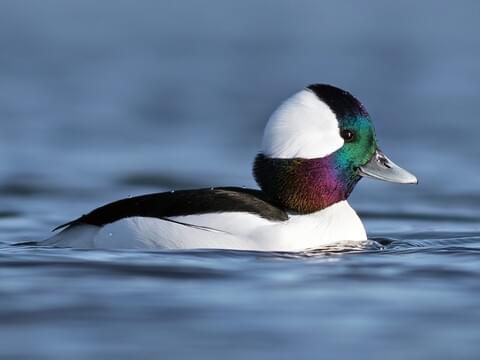
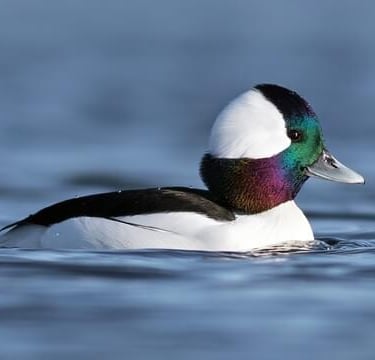
The Bufflehead is the smallest diving duck you'll encounter on Tampa Bay, and arguably the most visually striking. The drake is a bold black-and-white bird with an iridescent green-and-purple head patch that catches the light in a way that's almost electric when you see it up close on the water. Hens are dark brown with a neat white cheek patch.
What they lack in size, Buffleheads make up for in speed and agility. They're quick off the water, quick in the air, and quick to flare if anything looks wrong in the decoy spread. Shooting Buffleheads consistently is a point of pride among experienced waterfowlers — they'll expose weaknesses in your swing in a hurry.
Captain Phil targets Buffleheads throughout the Tampa Bay season. They tend to mix with Bluebill flocks on the open bay but also work bay points and grass flat edges. They respond well to decoys and will commit hard when conditions are favorable. Excellent table fare, too — one of the better-eating ducks you'll take in Florida.
Redhead — Florida's Most Beautiful Wintering Duck
Season presence: November through January Daily bag limit: 2 per day
The Redhead drake is genuinely one of the most handsome ducks in North America. The rich brick-red head, pale gray body, black chest, and blue-gray bill make for an unmistakable profile — both in the field and on the water. Hens are warm brown with a lighter face, similar to the Canvasback hen but with a more rounded head profile.
Tampa Bay hosts a significant wintering population of Redheads, and Captain Phil specifically targets them. Like other divers, they favor open water and are most often found in the deeper portions of the bay, though they'll work flats and grass edges when feeding. They're less wary than some species and will commit to a spread with conviction — which is both rewarding to watch and rewarding to shoot.
One important ID note: Redheads and Canvasbacks look superficially similar at distance. The Canvasback has a longer, sloping forehead profile that gives the head a distinctive wedge shape, while the Redhead has a more rounded head. Canvasback limits are often extremely restricted or closed in a given season, so getting that ID right matters.
Black-bellied Whistling Duck — Florida's Year-Round Resident
Season presence: Year-round Florida resident Daily bag limit: 6 per day (separate from general duck limit — verify annually)
The Black-bellied Whistling Duck is unlike anything else you'll encounter in a Tampa Bay blind. These are long-legged, almost goose-like birds with a bright coral-red bill, chestnut body, striking black belly, and bold white wing patches that flash in flight. They're loud — their high, whistling calls are one of the unmistakable sounds of a Florida morning on the water.
Unlike the migratory divers that make up most of Tampa Bay's duck hunting, Black-bellied Whistling Ducks are year-round Florida residents. They don't follow the same migration-driven timing as scaup or Buffleheads — they're simply here, in agricultural fields, wetland edges, retention ponds, and bay margins throughout the year.
They carry their own bag limit separate from the general 6-duck daily aggregate, which is an important regulatory distinction. Captain Phil and his clients encounter them regularly, particularly during early and mid-season hunts. They fly in distinctive formations, often in larger groups, and their approach is unmistakable once you've seen it.
Ring-necked Duck — The "Ringbill" That Confuses Everyone
Season presence: November through January Daily bag limit: Counted within the general 6-duck limit
The Ring-necked Duck has one of the most misleading names in waterfowl — the "ring" on its neck is a faint chestnut collar that's virtually impossible to see in the field. What you will see clearly, and what gave the bird its alternate name "Ringbill" among hunters, is the distinctive white ring near the tip of the bill and the white ring at the bill base.
The drake is a boldly patterned bird: black back, black chest, white flanks with a distinct vertical white slash near the shoulder, and that ringed bill. Hens are warm brown with the same distinctive bill pattern. In flight, Ring-necks show a gray wing stripe rather than the white stripe of scaup, which is useful when birds are moving fast overhead.
Ring-necks are more often associated with freshwater — ponds, impoundments, and lake margins — than the open saltwater of Tampa Bay. But they're very much part of the Florida winter picture, particularly in the freshwater areas adjacent to tidal systems. Captain Phil's clients encounter them, especially in areas where freshwater drains meet the bay.
Ruddy Duck — The Chunky Little Stiff-tail
Season presence: November through January Daily bag limit: 15 per day
The Ruddy Duck may be the most underappreciated bird in Tampa Bay's winter waterfowl community, but the generous bag limit — 15 per day — reflects a healthy and abundant population. These are small, compact divers with a distinctive stiff, upright tail that they carry cocked at an angle when resting on the water. In winter plumage, the drake is dull brown overall with a crisp white cheek patch and a powder-blue bill that's subtle but distinctive.
Ruddy Ducks tend to sit tight on the water, sometimes frustratingly so — they'd rather dive than flush, which can test your patience in retrieving. They decoy reasonably well and are commonly encountered mixed into larger rafts of scaup on the open bay.
Mottled Duck — Know Before You Shoot
Season presence: Year-round Florida resident Daily bag limit: Restricted — verify with FWC before hunting
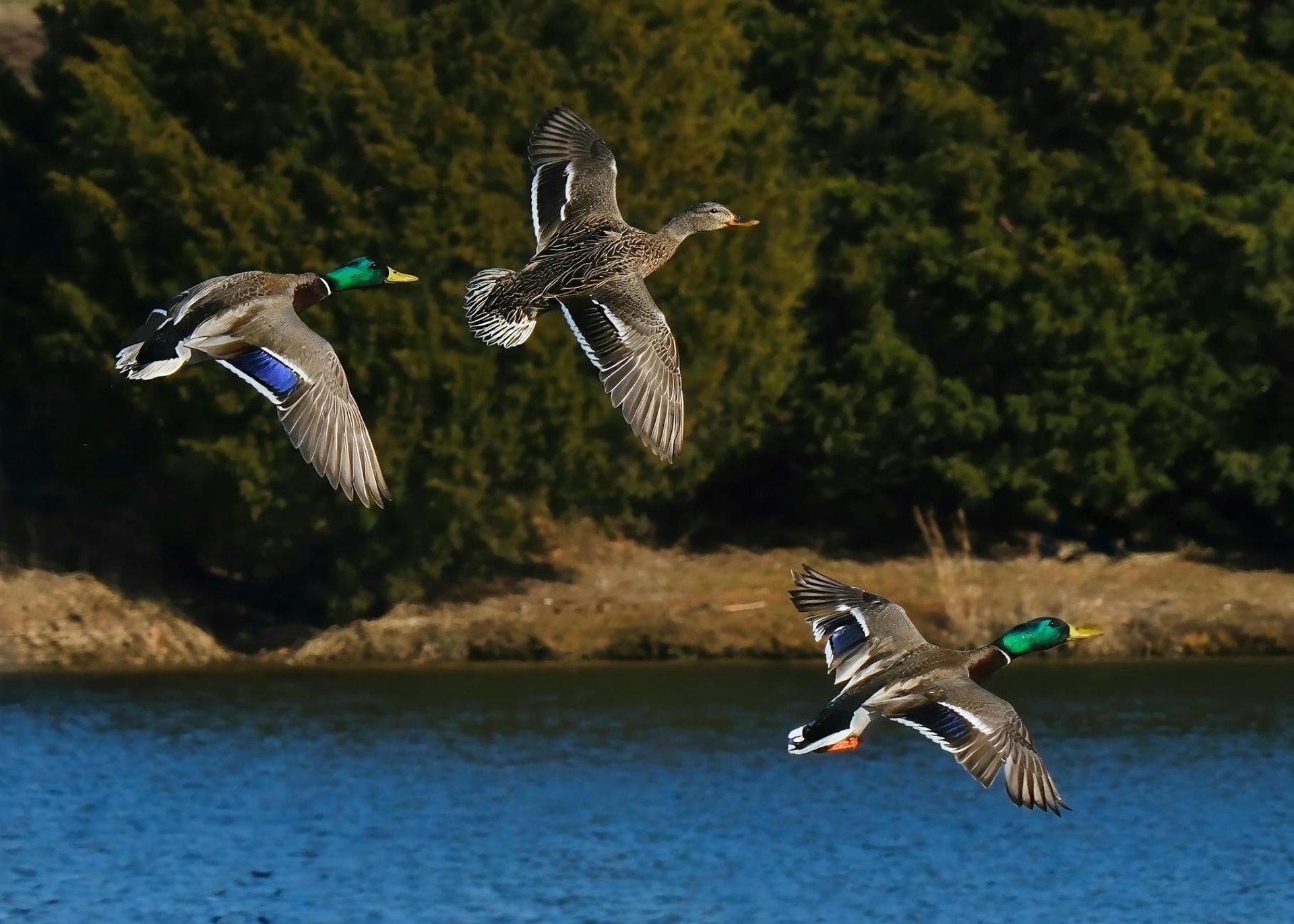
The Mottled Duck deserves a prominent mention not primarily as a target species, but as a critical identification challenge. This Florida resident puddle duck looks almost identical to a hen Mallard — brown overall with a mottled pattern, orange bill with dark markings, and a blue-purple speculum. The key differences are the Mottled Duck's more uniformly dark body (less streaked than a Mallard hen) and the absence of a white border on both sides of the speculum (Mallard hens have white borders on both sides; Mottled Ducks typically have one or none).
Why does this matter? Mottled Ducks are a state-protected species under reduced bag limits due to ongoing population concerns, including habitat loss and hybridization pressure. Shooting a Mottled Duck over your limit, or misidentifying one as another species, carries real regulatory consequences. Know your birds before you raise your gun.
Teal — Early Season Fast Action
Season presence: Blue-winged and Green-winged Teal; early season September window plus main season Daily bag limit: 4 per day during main season
Teal deserve a mention for hunters planning to take advantage of Florida's early teal season — a brief window typically in September that opens before the main duck season. Blue-winged Teal are the primary target, with their powder-blue forewing patches and the drake's distinctive white facial crescent. They're fast, small, and tend to move in tight flocks that twist and turn low over the water.
Green-winged Teal show up through the main season as well. The drake Green-wing is a richly patterned bird with a chestnut head, green eye patch, and an intricate gray body with a distinctive vertical white bar at the shoulder. Both species are excellent table fare.
Teal hunting is a distinct early-season experience from the main bay diver hunting that defines Captain Phil's operation. If you want to experience both the early teal flights and the peak bluebill and bufflehead action of mid-winter, Tampa Bay has the calendar to accommodate both.
Hooded Merganser — A Common Encounter, Not a Primary Target
Season presence: November through January Daily bag limit: 5 per day (no more than 2 Hooded Mergansers)
You will see Hooded Mergansers on Tampa Bay. The drake is genuinely spectacular — black and white with a bold, fan-shaped crest that it raises and lowers dramatically. They're one of the prettiest birds in North American waterfowl, and clients regularly get excited when they come in close.
Hooded Mergansers are primarily fish-eaters, which affects their table quality — they have a strong, fishy flavor that most hunters find unappealing compared to the vegetarian and invertebrate-feeding divers that dominate Tampa Bay hunting. They're legal to take, but they're typically passed in favor of other species. Worth knowing, worth identifying, and worth appreciating when they work your spread.
What Makes Tampa Bay Exceptional for Waterfowl
The combination of species that winters on Tampa Bay is genuinely unusual. You have abundant Bluebills and Buffleheads from the northern breeding grounds, a significant Redhead population, year-round residents like Black-bellied Whistling Ducks, and enough species diversity to keep any waterfowler engaged throughout a full morning on the water.
What makes it work is the habitat. Tampa Bay's shallow estuary provides the seagrass beds, mollusks, and aquatic vegetation that diving ducks need through the winter months. Add to that Florida's relatively mild weather and the bay's position along the Atlantic and Mississippi flyways, and you have one of the most productive coastal waterfowl destinations in the southeastern United States.
Captain Phil Pegley has been hunting these waters long enough to know where the birds move as the season progresses, how tides and wind shape daily distribution, and which species are showing up in numbers on any given week. That local knowledge — built over years on the water — is exactly what a guided charter puts to work for you.
Ready to Hunt These Birds for Yourself?
Duck Hunting Charters operates out of Ruskin, Florida, running morning and afternoon hunts throughout Florida's fall and winter waterfowl season on Tampa Bay. Small groups, local expertise, and the species mix that makes Florida coastal hunting unlike anywhere else in the country.
Contact Captain Phil directly to book your hunt:
📞 813-416-6296 | ✉ captphilpegley@gmail.com | duckhuntingcharters.com
Always verify current season dates, bag limits, and species-specific regulations at myfwc.com before hunting. Regulations are updated annually.
© 2025. All rights reserved. Site design by

