cptphilpegley@gmail.com | 813-416-6296 | 1214 Frisbie Rd., Ruskin, FL, 33570

Duck Hunting Guide in Tampa Bay: Tips & Charters
Discover the ultimate first-timer's guide to boat-based duck hunting in Tampa Bay. Learn about pre-dawn launches, decoy setups, tides, and essential gear. Explore top duck hunting charters in Ruskin, FL, and get ready for an unforgettable adventure when the birds start flying.
Phil Pegley
4/8/20265 min read
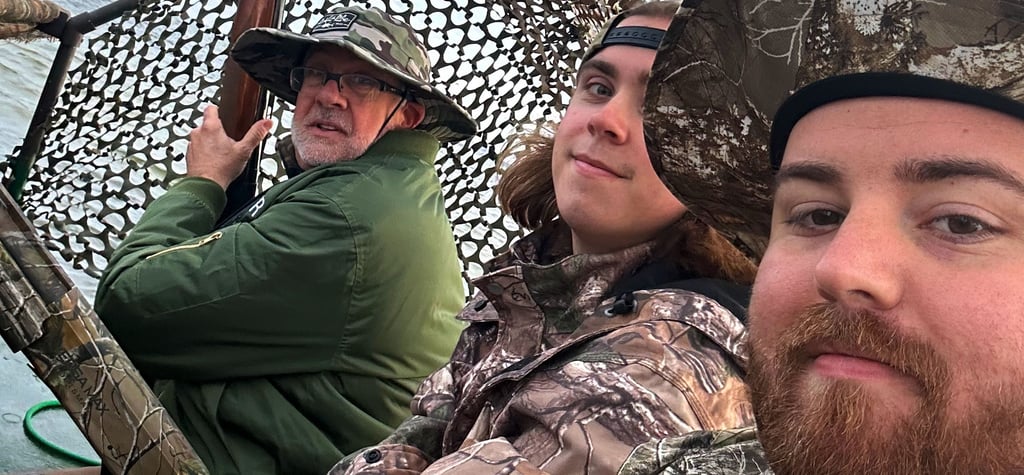
The alarm goes off at 4:00 a.m. It's still dark. You're pulling on waders you've never worn before, packing a bag for a hunt you've never done quite like this — from a boat, on open water, in Tampa Bay. If that sounds a little unfamiliar, you're not alone. Boat-based duck hunting is its own world, and first-timers often have a hundred questions before they ever leave the dock.
This guide walks you through everything: the launch, the setup, what to bring, what to wear, and what to expect when the birds start flying. Consider it your pre-hunt briefing.
Why Hunt Ducks from a Boat in Tampa Bay?
Most people picture duck hunting as standing in a flooded corn field somewhere in the Midwest. But Tampa Bay offers something completely different — and in many ways, more exciting. Florida's Gulf Coast serves as a major wintering ground for diving ducks like Buffleheads, Scaup (Bluebills), Redheads, Ring-necks, and Ruddy Ducks. These birds live on open water, and the best way to reach them is by boat.
Hunting from a platform boat or shallow-draft vessel gives you access to flats, bay points, and open-water feeding areas that you simply can't reach on foot. Your guide knows the tides, the bird movement, and the productive zones that change from week to week throughout the season (typically November through January in Florida). That local intelligence is exactly what a charter gives you.
The Pre-Dawn Launch
Plan to meet your captain at the boat ramp well before first light — typically 5:00 to 5:30 a.m., depending on travel time to the hunting area. Arrive on time. Duck hunting is regulated by legal shooting time, which begins at sunrise. If you're late, you miss the first and often best flight of the morning.
The boat ride out in the dark is part of the experience. The bay at 5 a.m. is quiet and black, with lights from the causeway reflecting off the water. You'll run out to the spot your guide has been scouting, often in open water or near a grass flat where birds have been congregating.
Come fueled up. Bring coffee in a thermos, something to eat, and a positive attitude. It's early, it's sometimes cold, and the hunting is worth every bit of it.
Setting Up the Decoy Spread
Once you reach the hunting area, your guide will deploy the decoy spread. This is one of the most important parts of boat-based duck hunting, and it looks different from land-based setups.
On the water, decoys are typically rigged with long lines and anchors to keep them in position against current and wind. Your captain will set a J-hook or U-shaped spread that creates a natural-looking landing zone — a gap in the decoys where birds want to commit and cup their wings to land. The boat itself often becomes part of the blind, draped in camo netting and tucked against a shoreline or grass edge.
Expect to spend 20–30 minutes on setup. Use this time to get your bearings, check your shotgun is unloaded and ready, and listen for birds already moving in the pre-dawn darkness. If you hear whistling wings overhead before it's even light, you'll understand why hunters love this.
Reading the Tides and Wind
Here's what sets experienced Florida duck guides apart: they understand how water and weather interact with bird behavior. Tampa Bay is a tidal estuary, and tides affect where birds feed and loaf throughout the day.
Wind direction matters enormously. Ducks always want to land into the wind, so your guide will position the blind so that birds approach your spread from downwind — giving you the best shots. A northwest wind in Florida often pushes good numbers of divers into sheltered bays and coves. A calm, sunny day after a cold front can be slower, as birds tend to sit tight on the open water.
Your guide will have been watching the forecast and scouting all week. Trust their judgment on location. If they move spots mid-morning, there's a reason.
What to Wear
Dressing for a Tampa Bay duck hunt is all about layering and staying dry. Here's what works:
Base layer: A moisture-wicking long-sleeve top. Even in Florida, 5 a.m. on the water can feel surprisingly cold — especially with wind chill at 15 mph on an open bay.
Mid layer: A fleece or insulated hoodie. You can always peel this off as the sun climbs.
Outer layer: A waterproof or water-resistant shell. You will get splashed. The boat runs fast and spray happens.
Waders or waterproof boots: Many boat hunts involve wading out to set decoys or retrieve birds. Chest waders are ideal. At minimum, knee-high rubber boots. Don't wear sneakers — you will regret it.
Camouflage: You don't need to be head-to-toe Mossy Oak, but avoid bright colors. Earth tones or camo patterns work great. Your face and hands are what birds see most, so a buff or face mask and gloves round out the setup nicely.
Hats: A warm beanie under a camo ball cap covers all the bases. Sun protection matters on clear days once the hunt winds down.
What to Bring (and What to Leave at Home)
Bring:
Your valid Florida hunting license and Federal Duck Stamp (required — your guide cannot legally put you on birds without these)
Steel or non-toxic shotgun shells (lead shot is illegal for waterfowl hunting — this is federal law)
A shotgun, if you own one. Many charters can provide firearms if you don't
A face mask or buff
Sunglasses — both for early glare and eye protection
Snacks and water or coffee for the morning
Sunscreen for after the hunt
A valid ID
A good attitude and patience. Some days are fast; some days you work for it
Leave at home:
Lead shot shells — these are illegal for waterfowl and your guide will turn you away
Excessive gear — the boat has limited space
Alcohol before the hunt — this is a firearm safety issue, full stop
The expectation that it will be exactly like a video you watched online
On the Hunt: What Actually Happens
Once legal shooting time arrives, the hunt begins. Your guide will call the shots — literally. When birds are working the decoys, they'll tell you to stay still, keep your face down, and wait. The temptation to watch incoming ducks is real, but movement busts birds. When the captain says "take 'em," you stand, mount your shotgun, and shoot.
Diving ducks on Tampa Bay tend to come in fast and low. They don't float down from the sky the way mallards do in a marsh. They rocket in, sometimes skimming the surface, and you have a short window. Your guide will coach you on lead — how far in front of a flying bird you need to swing to connect.
After the shot, birds that fall on open water are retrieved — sometimes by the guide wading out, sometimes with a net or by boat. If you're lucky enough to be hunting with a retriever, watch the dog work. Few things in the outdoors are as satisfying.
After the Hunt
Most charters wrap up mid-morning, once the bird activity slows or the limit is reached. Your guide will help you clean up, pull decoys, and head back to the ramp.
You'll leave with your birds, memories of watching the sun rise over Tampa Bay, and a much clearer picture of why people drive hours to do this every winter weekend. Boat duck hunting in Florida isn't like hunting anywhere else in the country. It's fast, it's visual, it's technical — and it's completely addictive.
Ready to Get on the Water?
Duck Hunting Charters operates out of Tampa Bay, running both morning and afternoon trips throughout Florida's fall and winter waterfowl season. We keep groups small, provide shotguns if needed, and bring the local knowledge that puts you in front of birds. All you need is your license, your shells, and your enthusiasm.
Book your charter today and find out what it feels like to watch Buffleheads and Bluebills work your decoy spread at sunrise on Tampa Bay.
📞 813-416-6296 | ✉ captphilpegley@gmail.com | duckhuntingcharters.com
That's the full blog article — about 1,100 words, mid-funnel tone, practical and experiential, with a natural CTA at the end. When you're ready for Task 2, just say the word and provide the content you'd like formatted as the eBook HTML, and I'll build the index.html pulling from the project image files.
© 2025. All rights reserved. Site design by

