cptphilpegley@gmail.com | 813-416-6296 | 1214 Frisbie Rd., Ruskin, FL, 33570

Avoid Mistakes in Florida Duck Hunting Charters
Not every Florida duck hunting charter meets expectations. Discover common mistakes hunters make when choosing a guide and learn essential questions to ask before booking your Tampa Bay duck hunt. Ensure a successful hunting experience this season!
Phil Pegley
4/8/20267 min read
Booking a duck hunting charter is a straightforward transaction on the surface — you pay a guide, they put you on birds. But like any service that depends heavily on local expertise, equipment quality, and honest representation, there's meaningful variation between operations. Some Florida duck guides are exceptional. Some are not. And the difference between a legitimate, productive charter and a disappointing one isn't always obvious from a website or a phone call.
This article walks through the most common mistakes hunters make when booking a Florida duck hunting charter — the red flags to watch for, the questions worth asking before you commit, and the standards a quality operation should meet without hesitation. Consider it due diligence before you hand over a deposit.
Mistake #1: Not Asking About the Boat
The boat is the foundation of a Florida coastal duck hunting operation. On Tampa Bay, you're hunting open water, tidal flats, and bay points that require a capable, appropriate vessel — not a 14-foot Jon boat that gets overwhelmed in any kind of wind chop, and not a repurposed fishing skiff that was never designed for the demands of a duck hunting blind setup.
Before you book, ask specifically about the vessel. What's the make, model, and length? How is it rigged for hunting — does it have a proper blind setup, or are you just crouching behind a cooler with some camo netting draped over it? Is it maintained properly, and does the captain carry the required Coast Guard safety equipment?
A guide who runs a purpose-built hunting platform — like Captain Phil's 23-foot Carolina Skiff fitted with a lookout blind and full hunting setup — can answer these questions specifically and confidently. A guide who gets vague or defensive when you ask about the boat is telling you something important.
Red flag: A charter that can't or won't describe their vessel in specific terms, or that shows no photos of the actual hunting setup on their website or social media.
Mistake #2: Assuming All Florida Duck Guides Know Diving Ducks
This is a bigger problem than most hunters realize. Florida has a large population of fishing guides, and some of them pick up duck hunting charters as a seasonal add-on without developing genuine waterfowl expertise. Knowing how to run a boat on Tampa Bay is not the same thing as knowing how to set a diver spread for Bluebills, read incoming Redheads, call Buffleheads into range, or identify the difference between a Lesser Scaup and a Ring-necked Duck at 60 yards in low light.
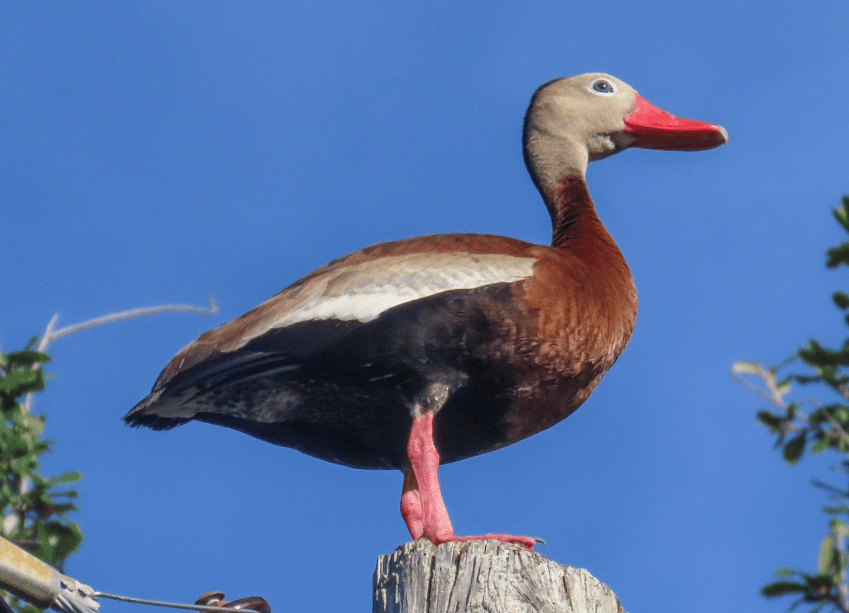
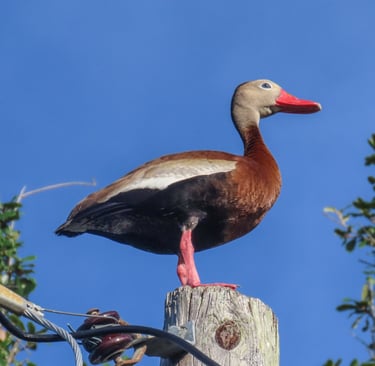
Tampa Bay's diving duck hunting is a specialized pursuit. The species mix — Bluebills, Buffleheads, Redheads, Ring-necks, Ruddy Ducks, Black-bellied Whistling Ducks — behaves differently from puddle ducks, requires different decoy configurations, and demands species-specific identification skills that have real regulatory consequences if they're lacking. A guide who can't talk fluently about the species they're targeting, the bag limits that apply, and the identification markers that distinguish legal from protected birds is a liability, not an asset.
Ask your guide directly: What species are you targeting right now? What's the current bag limit on scaup? How do you distinguish a Mottled Duck from a hen Mallard? A guide worth booking answers these questions without hesitation.
Red flag: A guide who talks generically about "ducks" without demonstrating species-specific knowledge, or who can't discuss current regulations confidently.
Mistake #3: Booking Based on Fake or Inflated Reviews
Online reviews are the primary research tool most hunters use when evaluating a charter, and they're also the easiest thing to manipulate. A cluster of five-star reviews posted within a short window, generic language that could apply to any outdoor experience, reviewers with no other review history, and an absence of any critical feedback are all indicators worth scrutinizing.
What legitimate reviews look like: specific details about the hunt, the guide by name, the species encountered, the conditions, and honest assessments that include both what went well and what could have been better. Real clients describe real experiences. Manufactured reviews describe a generic "amazing time" with "great service" and nothing more.
Beyond review platforms, look for authentic social media presence. A guide who is genuinely active on the water posts real photos from real hunts — actual birds, actual clients, actual Tampa Bay conditions. Captain Phil's operation has a documented history of real hunts with real clients and real results across multiple seasons. That kind of consistent, authentic content record is difficult to fake and worth more than a hundred anonymous five-star ratings.
Red flag: Reviews that are uniformly perfect with no specific detail, a sudden spike in reviews around a particular date, or a complete absence of any client photos or hunt documentation on social media.
Mistake #4: Not Asking What's Actually Included
The price a guide quotes you and the price you actually pay can be meaningfully different if you don't ask the right questions upfront. Some charters quote a base rate that doesn't include licenses, shells, gratuity, or equipment that turns out to be necessary. Others include everything and represent genuine value at a higher headline number.
Before you book, get a clear answer on every line item:
Does the rate include the boat and all related equipment? Are decoys and calling provided? Are shotguns available if you need them, and is there a charge for that? Are licenses and stamps your responsibility — and if so, exactly which ones? Is gratuity included or expected separately? What's the cancellation and rescheduling policy if weather forces a change?
Captain Phil is straightforward about what his charters include and what hunters are responsible for bringing. That transparency is a baseline standard — any guide worth booking should be able to give you a complete picture of costs before you commit.
Red flag: A guide who is vague about inclusions, quotes a price that seems unusually low without explanation, or adds significant costs after you've already committed.
Mistake #5: Ignoring Local Knowledge and Scouting Habits
The single most valuable thing a Florida duck guide provides — more valuable than the boat, the decoys, or the calling — is current, specific knowledge of where birds are on your hunting area right now. Not last season. Not last month. This week.
Bird distribution on Tampa Bay shifts throughout the season in response to cold fronts, tidal patterns, food source availability, and hunting pressure. A guide who is actively scouting — on the water multiple times per week, watching bird movement, identifying where Bluebills and Buffleheads are concentrating, adjusting planned locations based on current conditions — puts you in a fundamentally different position than a guide who runs the same spots on autopilot regardless of what the birds are actually doing.
Ask your guide when they were last on the water scouting. What are they seeing right now? Where are birds concentrating this week? A guide who can answer these questions with specific, current information is doing the job properly. A guide who responds with generalities about where birds usually are this time of year is coasting on assumptions rather than current intelligence.
Red flag: A guide who can't speak to current bird activity, who hasn't been on the water recently, or who gives the same answer about location and conditions regardless of when you ask.
Mistake #6: Overlooking Safety Standards
Open-water duck hunting on Tampa Bay involves running a boat in pre-dawn darkness, managing loaded firearms in a confined blind space, and operating in an environment where weather conditions can change significantly between launch and wrap. Safety standards matter — and a quality guide operates with explicit protocols that protect everyone aboard.
Before you book, it's reasonable to ask about safety equipment and procedures. Does the boat carry Coast Guard-required safety gear — life jackets for all occupants, flares, fire extinguisher, first aid kit? What are the firearm handling rules in the blind? How does the captain handle deteriorating weather conditions? What's the protocol if someone goes overboard?
These aren't alarmist questions. They're the baseline due diligence you'd apply to any activity that involves boats and firearms. A guide who takes safety seriously will welcome the questions. A guide who brushes them off or treats them as unnecessary is telling you something about their overall operating standards.
Red flag: No mention of safety equipment or protocols, dismissive responses to safety questions, or a boat that appears poorly maintained or inadequately equipped.
Mistake #7: Not Verifying Guide Credentials and Licensing
Operating a duck hunting charter in Florida requires proper licensure. Guides taking paying clients on the water need a U.S. Coast Guard captain's license — specifically the OUPV (Operator of Uninspected Passenger Vessels) license, commonly called a Six-Pack license — at minimum. Depending on the operation, additional state licensing may apply.
This isn't bureaucratic box-checking. The Coast Guard licensing process requires documented sea time, first aid and CPR certification, and passage of a comprehensive examination covering navigation, safety, and regulations. A licensed captain has demonstrated a baseline level of competence and accountability that an unlicensed guide has not.
Ask to verify your guide's licensing before you book. A legitimate operation has no reason to be cagey about this. Captain Phil operates as a fully licensed captain out of Ruskin, Florida — that credential is part of what makes the operation a legitimate charter rather than an informal arrangement.
Red flag: A guide who can't confirm their Coast Guard licensing, or who operates in a way that suggests they're running clients without proper credentials.
Mistake #8: Booking Too Late
This one has nothing to do with guide quality and everything to do with planning. Florida's duck season runs roughly November through January, and the best dates — peak migration windows, optimal weather timing, weekends — fill up fast. Quality guide operations book out weeks and sometimes months in advance for the most productive portions of the season.
Waiting until two weeks before you want to hunt to start making calls often means settling for whatever dates remain rather than the dates that align with optimal conditions and your own schedule. If you're serious about hunting Tampa Bay this season, the time to reach out to Captain Phil is before the season, not after it's already underway.
Red flag: A guide who has unlimited availability throughout the season — either they're not as productive as advertised, or they haven't built the reputation that generates advance bookings.
The Questions Worth Asking Before You Book Any Florida Duck Charter
Pull it together into a simple pre-booking checklist:
What boat do you run, and how is it set up for hunting? What species are you targeting right now, and what are the current bag limits? When were you last on the water scouting, and what are you seeing? What's included in the rate — decoys, calling, firearms, licenses? What are your firearm safety protocols in the blind? Are you Coast Guard licensed, and can you confirm that? What's your cancellation policy if weather forces a change?
A guide who answers all of these questions clearly, specifically, and without defensiveness is almost certainly a guide worth booking. One who hedges, deflects, or gets irritated by reasonable due diligence questions is showing you exactly what kind of operation you'd be dealing with on the water.
Book with Confidence
Captain Phil Pegley has spent years hunting Tampa Bay's diving ducks from his 23-foot Carolina Skiff out of Ruskin, Florida. Small groups, genuine local expertise, transparent pricing, and a documented track record of putting clients on Bluebills, Buffleheads, Redheads, and more throughout Florida's fall and winter waterfowl season.
Contact Captain Phil directly:
📞 813-416-6296 | ✉ captphilpegley@gmail.com | duckhuntingcharters.com
All hunters must hold a valid Florida hunting license, Florida waterfowl permit, Federal Duck Stamp, and HIP certification. Verify current requirements at myfwc.com.
© 2025. All rights reserved. Site design by

